

Multiforme Mira: concrete built in layers
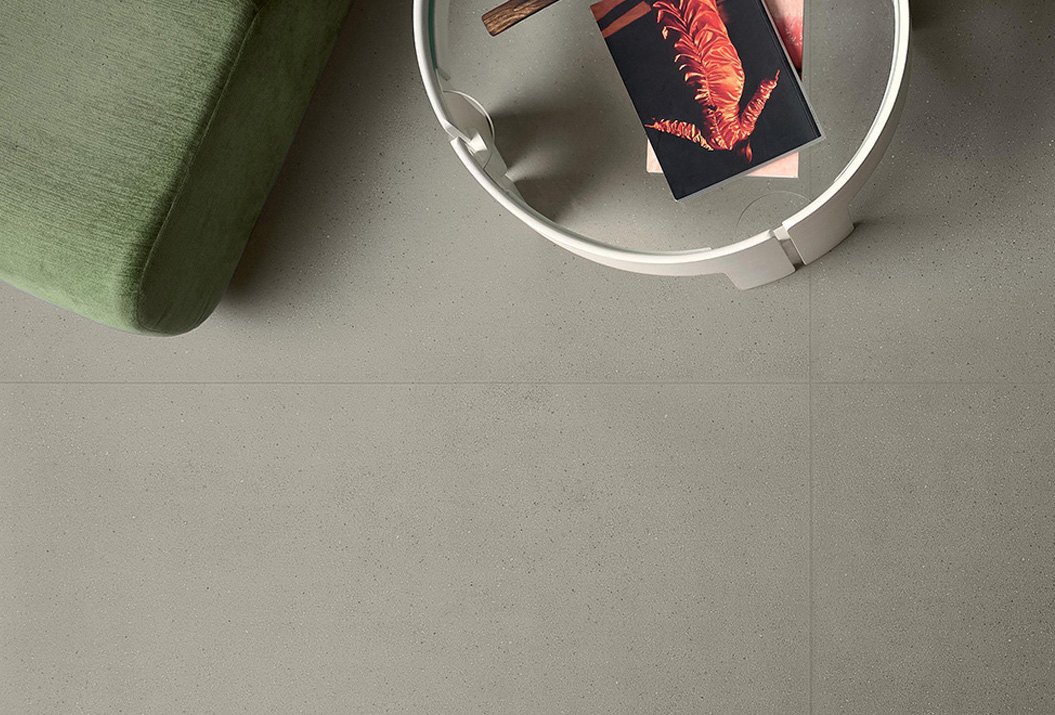
Sedimenta:
material beyond the surface
Multiforme Mira interprets the Sedimenta concept through the layering of mineral memories, markings and textures. Concrete becomes a tactile expanse in which pebbles, stone fragments and small aggregates surface like elements deposited over time.
Every inclusion adds depth to the overall composition: understated design meets measured decorative flair, making the surface instantly recognisable and allowing it to engage with architecture through controlled variations.
Pebbles, rocks and stone fragments
The graphic pattern of the concrete-effect porcelain stoneware is enriched by fine river pebbles, small rocks and mineral fragments: these inclusions introduce variations in scale, density and colour without disrupting visual continuity.
The surface acquires an energetic, tactile character, making it suitable both for minimalist interiors and for projects with a more pronounced decorative component.

Seven shades balancing
harmony and chromatic accents
The palette includes Sale, Lino, Bruma, Pomice, Quarzo, Coccio and Foresta. The first five shades range through neutral, easily co-ordinated tones, creating a versatile base for residential and commercial projects.
Coccio and Foresta introduce two bolder accents, ideal for rich blocks of colour, contrasts and focal points. The entire range can establish a dialogue with wood, stone, metal and small decorative sizes from the Marca Corona range.
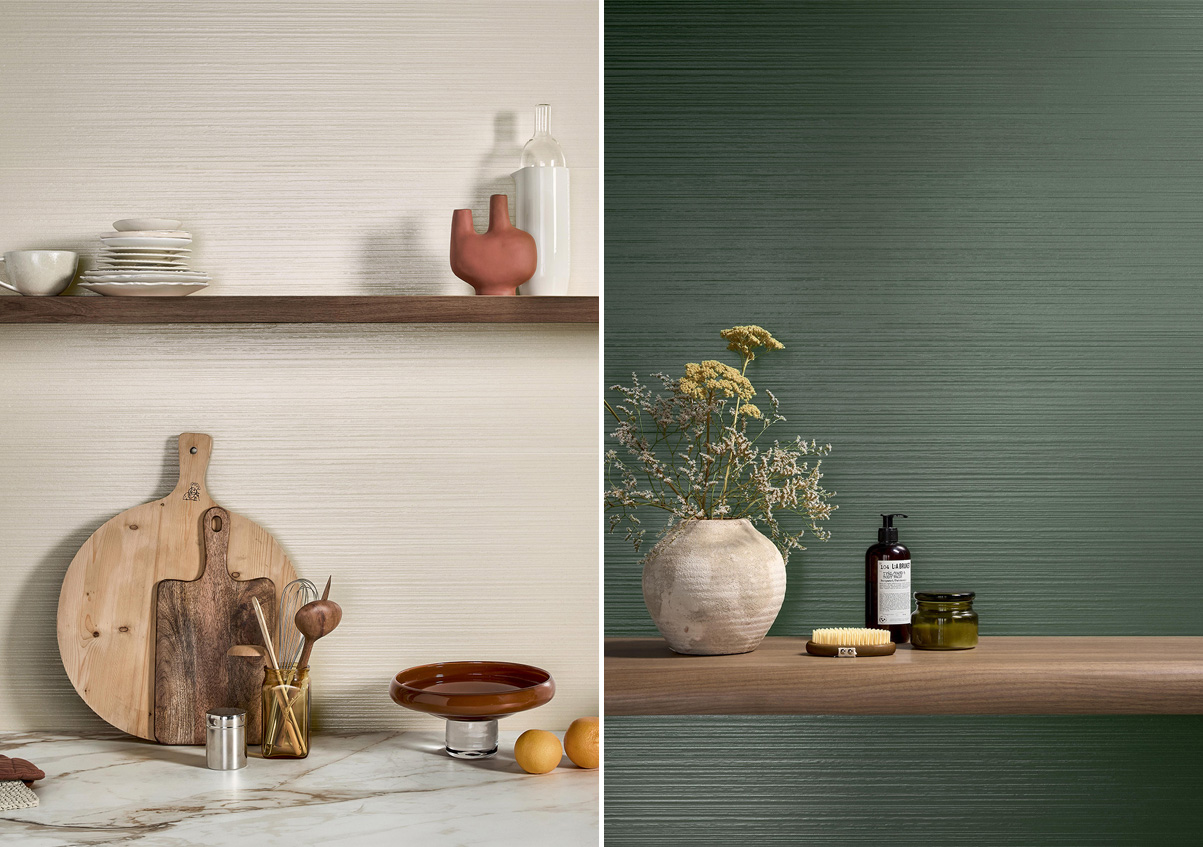
Multiforme Mira Wall Tiles:
light intersects the relief
Layering continues onto the walls with Multiforme Mira Wall Tiles, a matching white body offering in the 50x120 size. The shades Magnolia, Duna, Guscio, Cala and Aloe meet the three-dimensional structures Plica and Tassello, transforming reliefs and reflections into design elements.
Plica, a fluted and iridescent surface
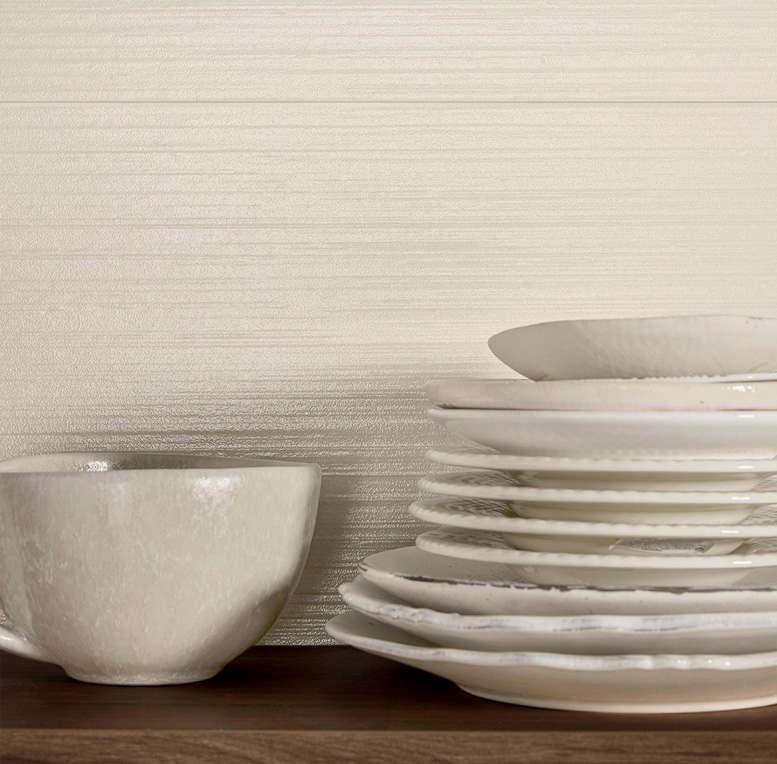
Plica develops the surface through a 3D fluted structure. The lines articulate the wall and alter its perception, guiding the eye along its length.
The Kristallina finish creates glossy, iridescent reflections that shift with the incidence of light. To the touch, the surface retains a soft, velvety feel, striking a balance between the precision of the relief and the fluidity of the finish.
Tassello,
the mosaic becomes structure
Tassello interprets three-dimensionality through a composition of small, fluted tesserae. The elements emerge from the matt matrix with glossy and lustrous finishes, generating a tactile mosaic imbued with varying light intensities.
The repetition of the tiles creates a dense, vibrant pattern: Plica focuses on continuity and direction, whereas Tassello enhances fragmentation and rhythm, offering two complementary structures, both available in the five wall tile colours.
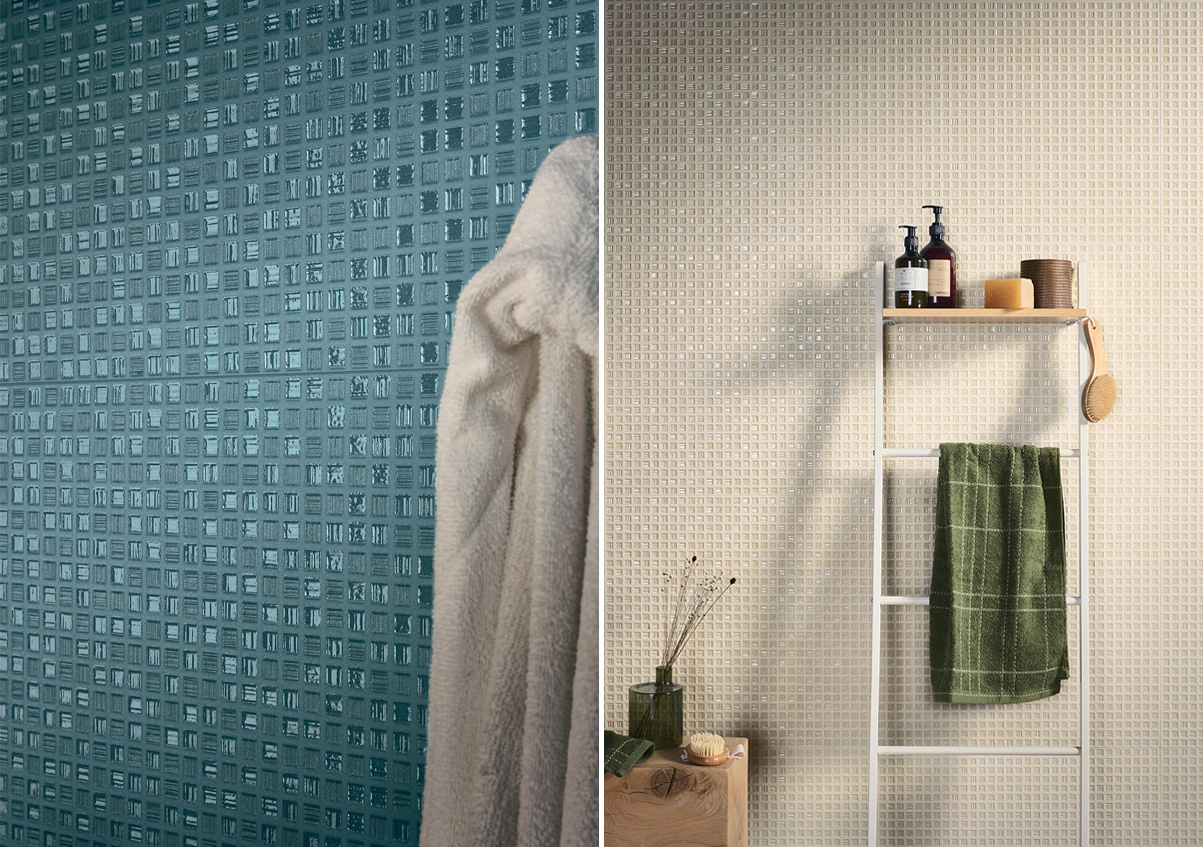
Two materials,
one matching system
Multiforme Mira combines porcelain stoneware and white body tiles: the concrete-effect plain tiles define the material and chromatic foundation of the spaces, whilst Plica and Tassello translate this identity onto vertical surfaces using relief and tactile variation.
This interplay between materials enables seamless continuity or controlled contrast, whether by matching shades or by highlighting walls, niches, and architectural features.
The 50x120 size as an interior design element
The 50x120 size minimises grout lines and enhances the visual continuity of the structures. The wall takes on an appearance akin to textured wallpaper, featuring reflections that alter its perception.
Plica and Tassello can clad bathrooms, living areas, hospitality spaces, and contract spaces: the vertical surface thus becomes an active component in shaping the environment.
Balance and compositional freedom
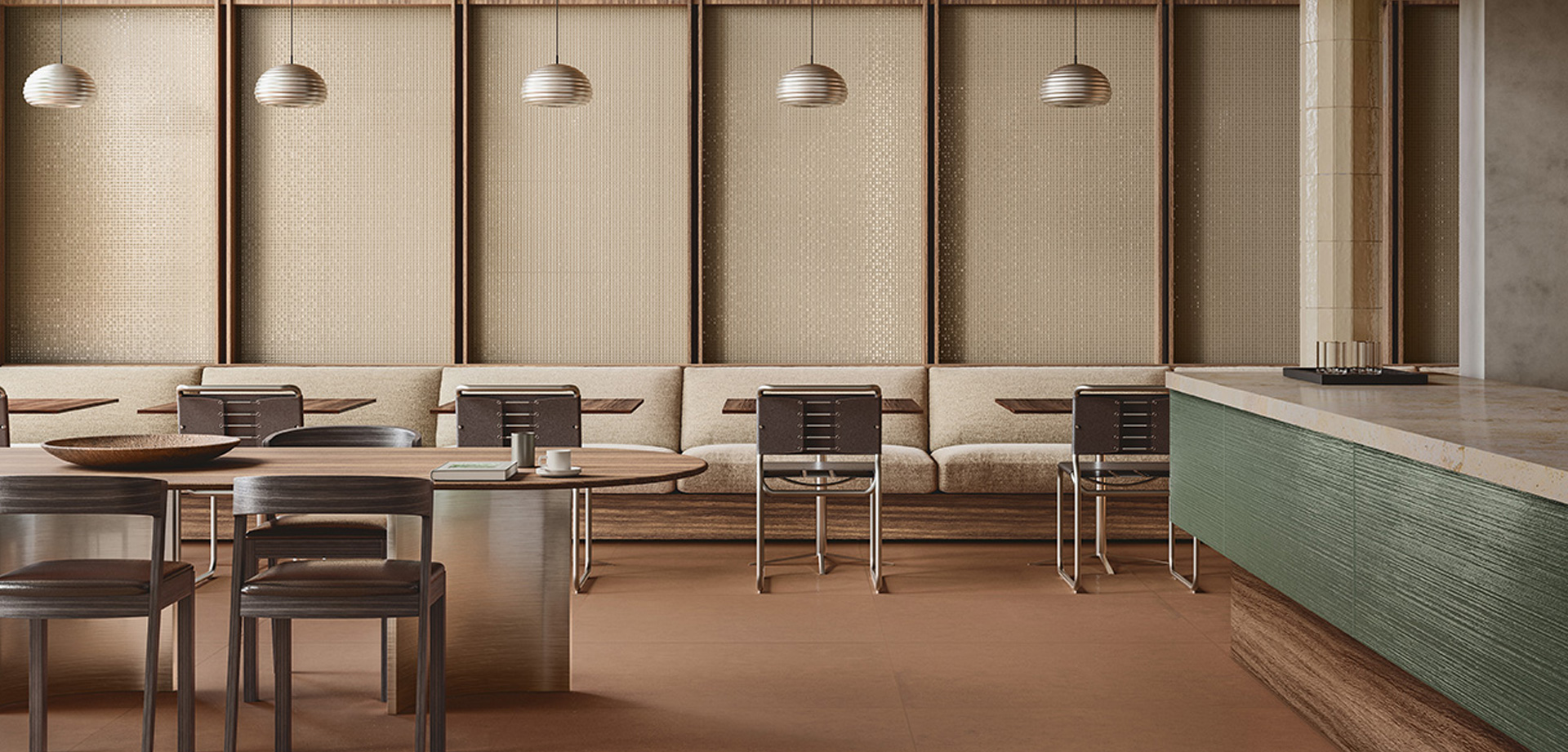
The versatility of Multiforme Mira stems from the fusion of an understated architectural base with more expressive details. The neutral tones allow for the creation of pared-back, welcoming spaces, whilst Coccio, Foresta, and the wall tile shades introduce more personal chromatic variations.
The 3D structures add a measured, dramatic dimension, whilst combinations with wood, stone, and small formats expand compositional possibilities. Mineral fragments, reliefs, and reflections transform the concrete effect into a layered material capable of evolving with light and its surrounding environment.