Looking back at Art City Bologna 2026. Our account of this weekend of art, with meetings, exhibitions and installations
What happened at this Art City Bologna 2026 edition and what were the highlights of the 3 days of events in central Bologna? We look back at the key moments of this dialogue between art and urban culture with the Marca Corona per l’Arte events.
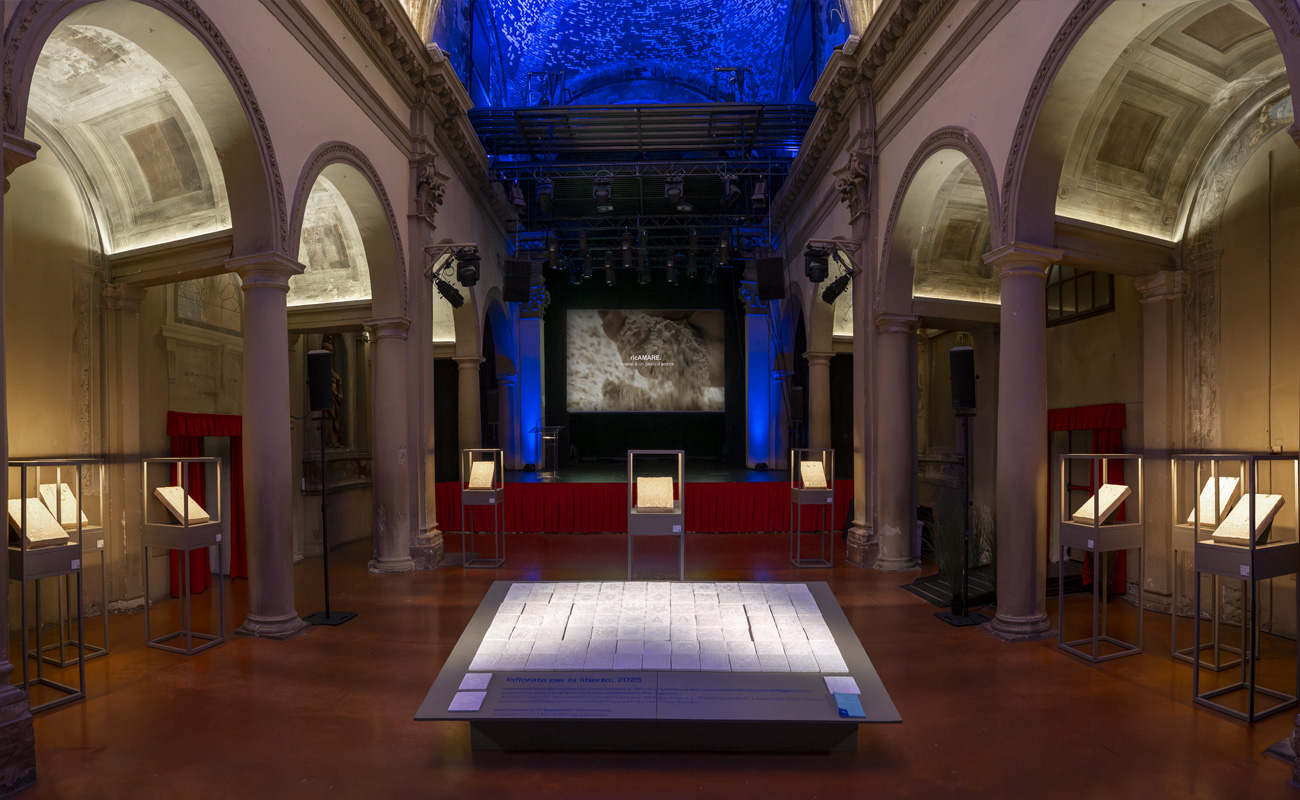
The city-wide Art City Bologna 2026 experience dominated the weekend from 6 to 8 February, with meetings and exhibitions that nourished the dialogue between art and the city, making it one of the key events in Italy’s artistic and cultural calendar.
Against this backdrop, Marca Corona per l’Arte contributed to the success of the festival, in which we partnered the programme of activities on Friday, Saturday and Sunday for the 4th consecutive year.
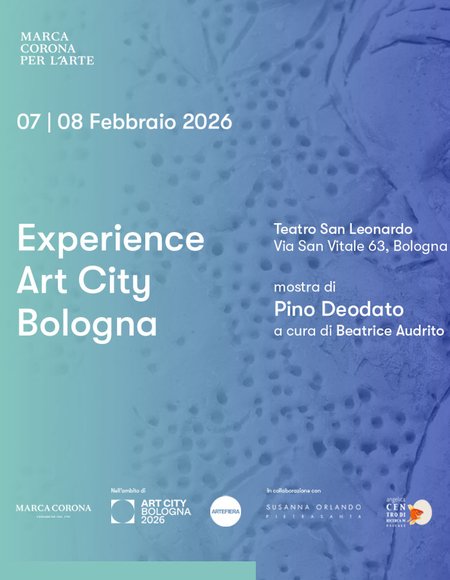
Our account of what happened therefore looks back over the key moments of these 3 days at Teatro San Leonardo, Via San Vitale 63, which as well as becoming the exhibition space for the show “ricAMARE. Il ricamo è un gesto d'amore” [“RicAMARE. Embroidery is an act of love”] by artist Pino Deodato also hosted the Premio Marca Corona prize for up-and-coming young artists and the domestic architecture conference “Il tempo del ritrovarsi: il progetto della quotidianità [“Time to rediscover ourselves: designing for daily life”]”.
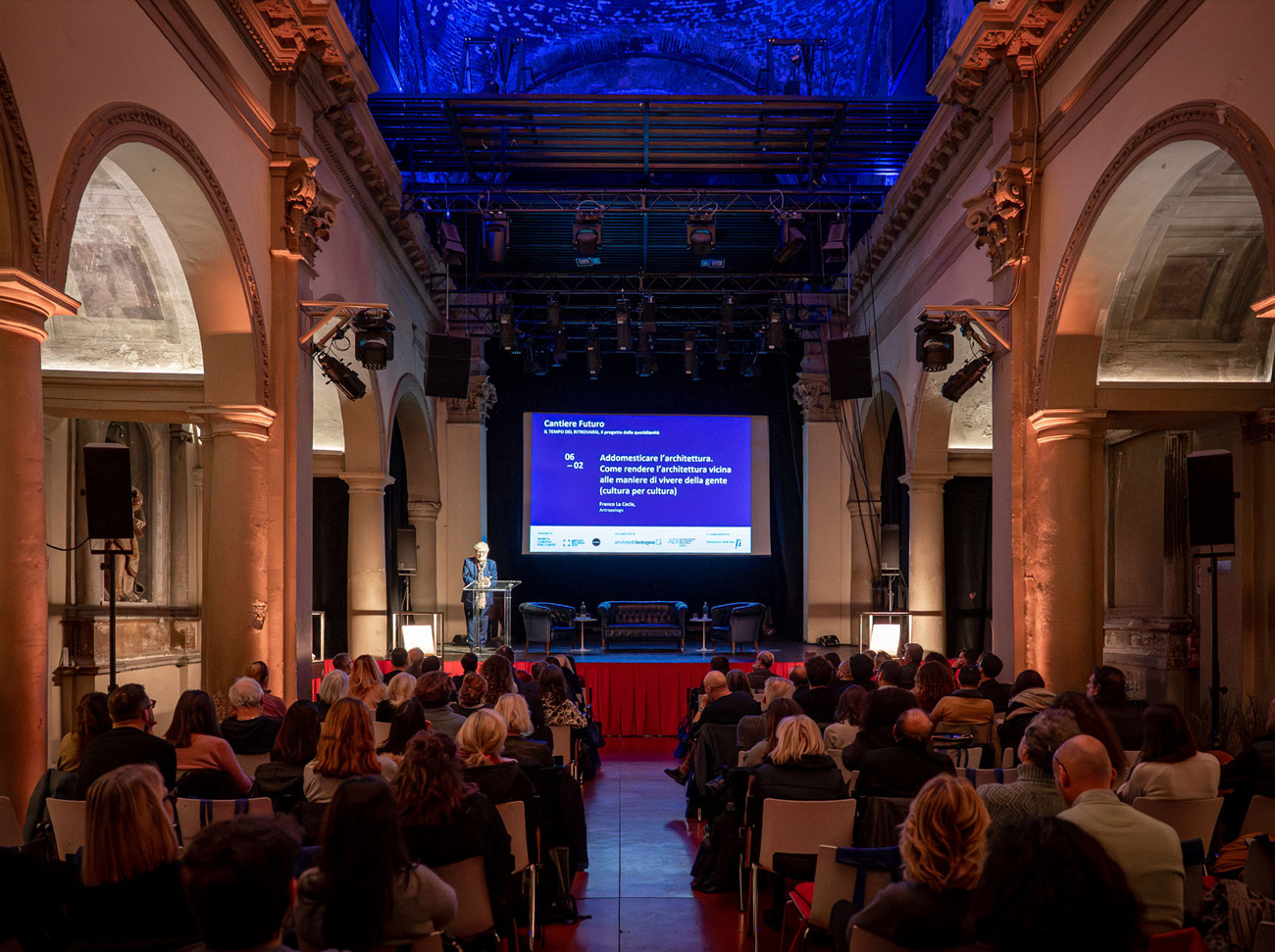
The introductory talk by anthropologist and professor Franco La Cecla “Addomesticare l'architettura. Come rendere l'architettura vicina alle maniere di vivere della gente (cultura per cultura)” [“Taming architecture. Shaping home architecture to people’s lifestyles (culture by culture)”] immediately turned the spotlight on these important aspects, analysing home life as first and foremost urban, cultural and relationship-centred.
The 1st round table discussion with Emily Marion Clancy, Marco Battaglia and Marco Marcatili
considered the home as a social good and a tool for urban regeneration, extending the focus to embrace housing policies, finance and the changes in household economies in the last few years.
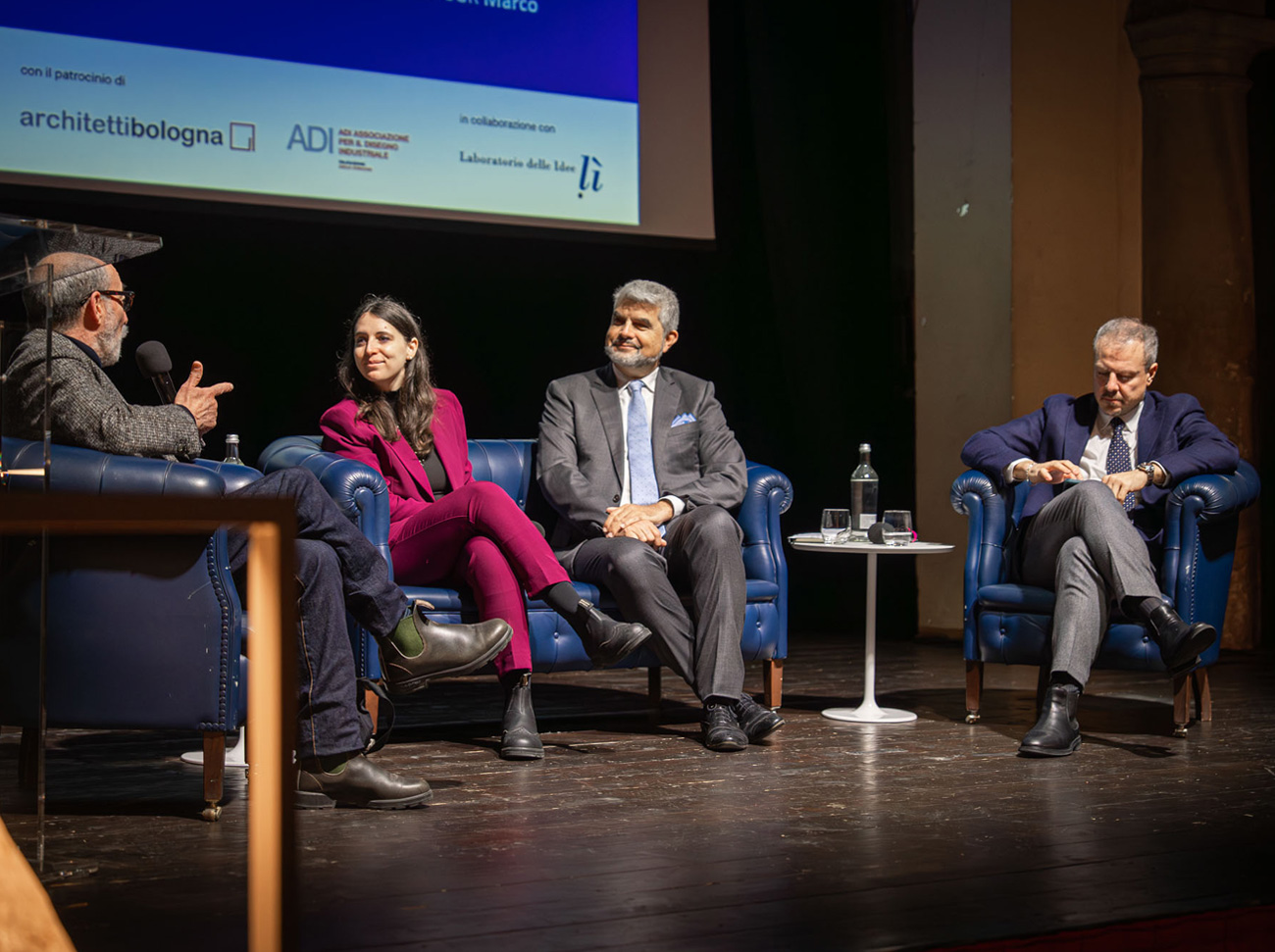
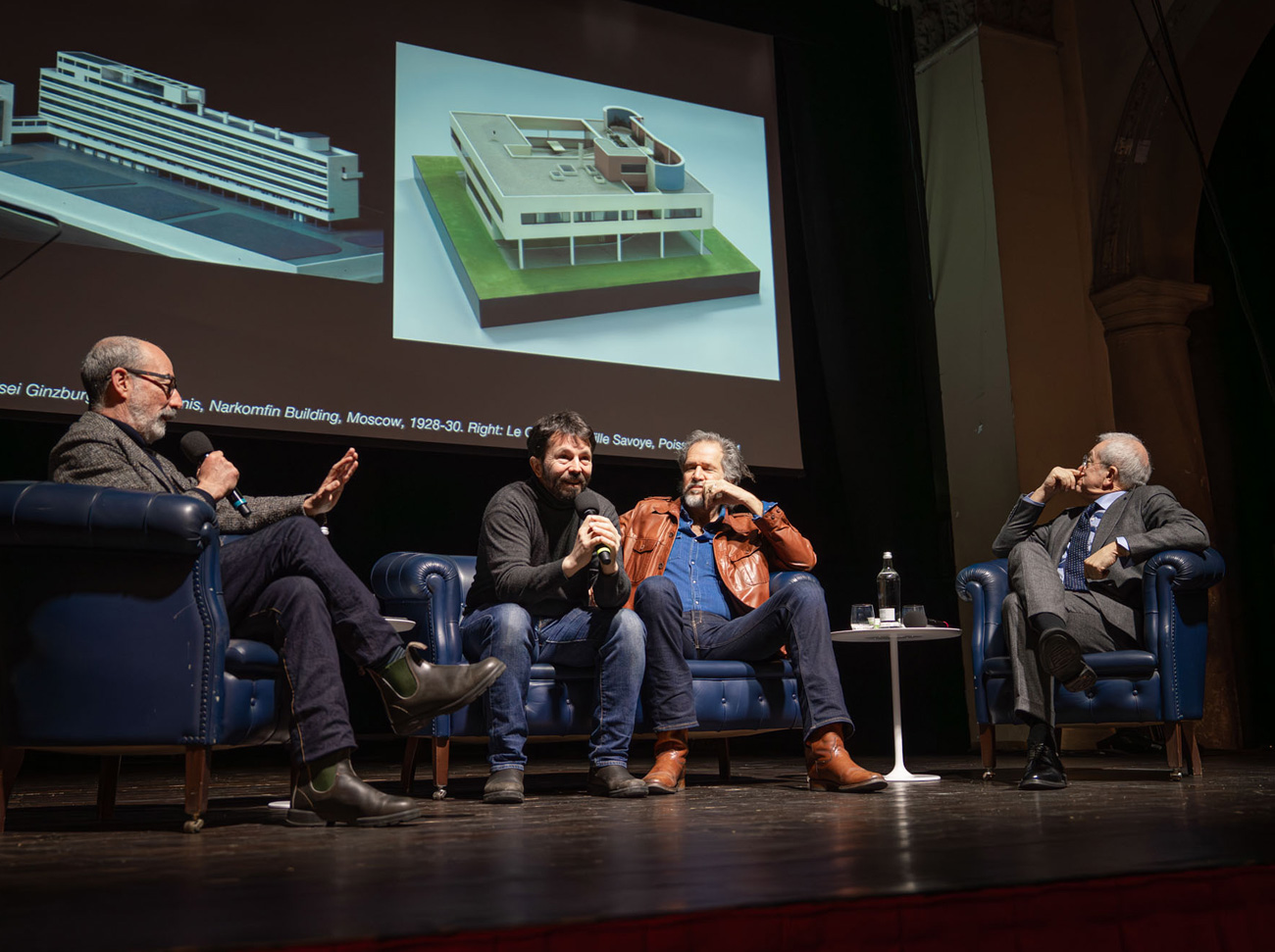
And it was around the meaning of making home architecture that the conference “Il tempo del ritrovarsi: il progetto della quotidianità” provided an opportunity for dialogue and rediscovery, to enable everyone involved to view daily life with fresh knowledge and attention.
Art City Bologna 2026 included the evening of the Premio Marca Corona award for talented young artists and designers
In this recap of the big moments of our Art City Bologna 2026, the awards ceremony of the “Premio Marca Corona” competition for up-and-coming artists is one of our most exciting memories.
Presented this year for the 4th time, the Premio Marca Corona has always showcased young creators in the art and design world, aiming to give them a real, remunerative opportunity to display their talent and make contact with the Italian and international arts scene.
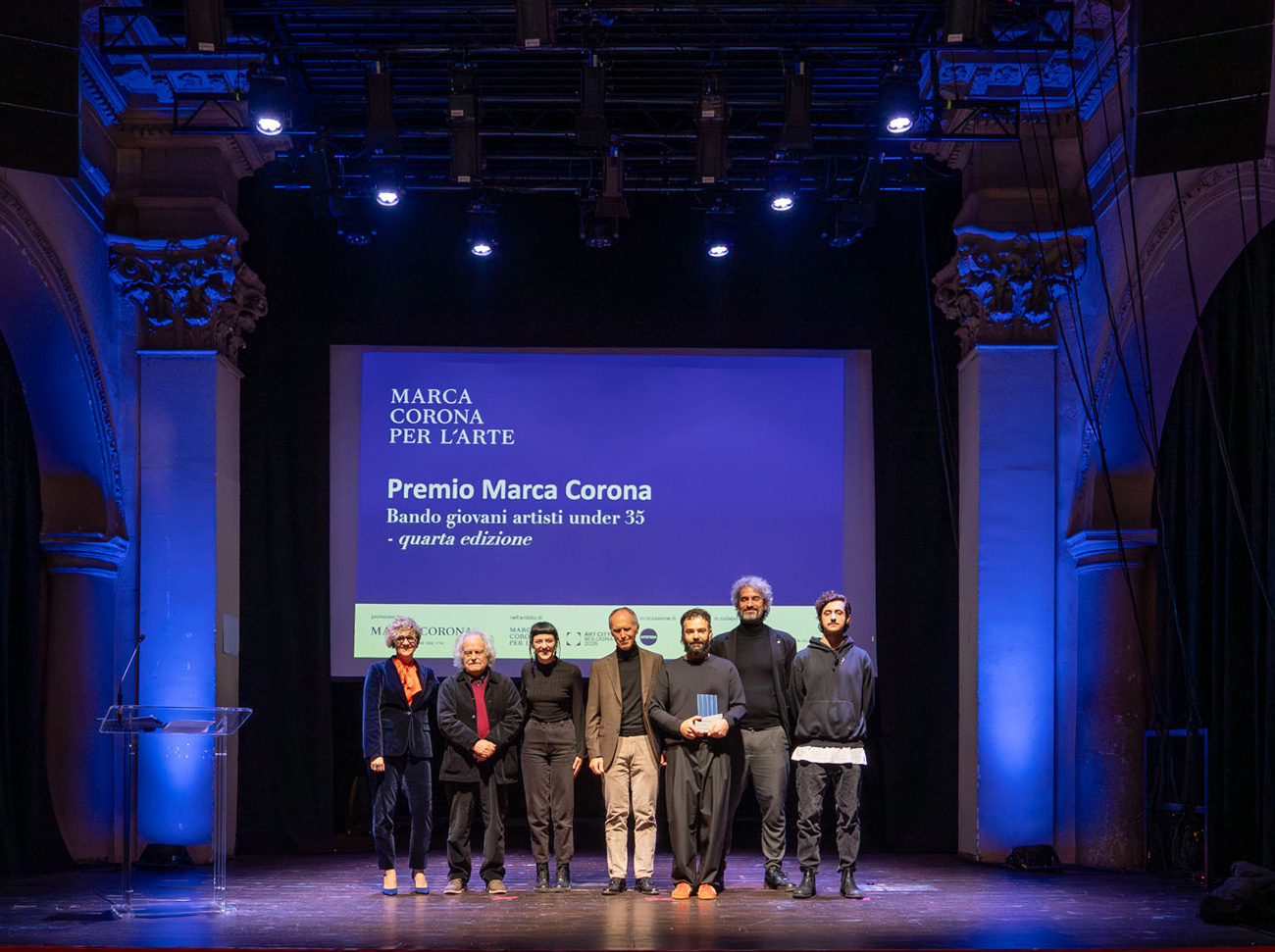
Therefore, on the evening of 6 February the stage of the Teatro San Leonardo welcomed the candidates for the Award, chosen this year by a jury comprising:
- Pino Deodato (Artist and Sculptor)
- Beatrice Audrito (Curator)
- Susanna Orlando (Gallery Owner)
- Antonio D'Amico (Director, Museo Bagatti Valsecchi, Milan)
- Davide Sarchioni (Curator and contemporary art historian)
- Paola Rivetta (cultural and scientific journalist)
- Marco Bassan (contemporary art curator, Founder of Spazio Taverna)
- Luca Fiandri (Head of R&D, Marca Corona)
- Mariachiara Russo (Head of Product Dev. and Creative Vision, Marca Corona)
The theme of the 2026 contest and project, ”Mani-mente-Mani. Allegorie della materia e della relazione” [“Hands-mind-Hands. Allegories of matter and relationships] emphasised manual skills, of physical contact with matter, the worthy of making and the relationship with matter, contrasting with the digital world and the dematerialisation of contemporary visual languages.
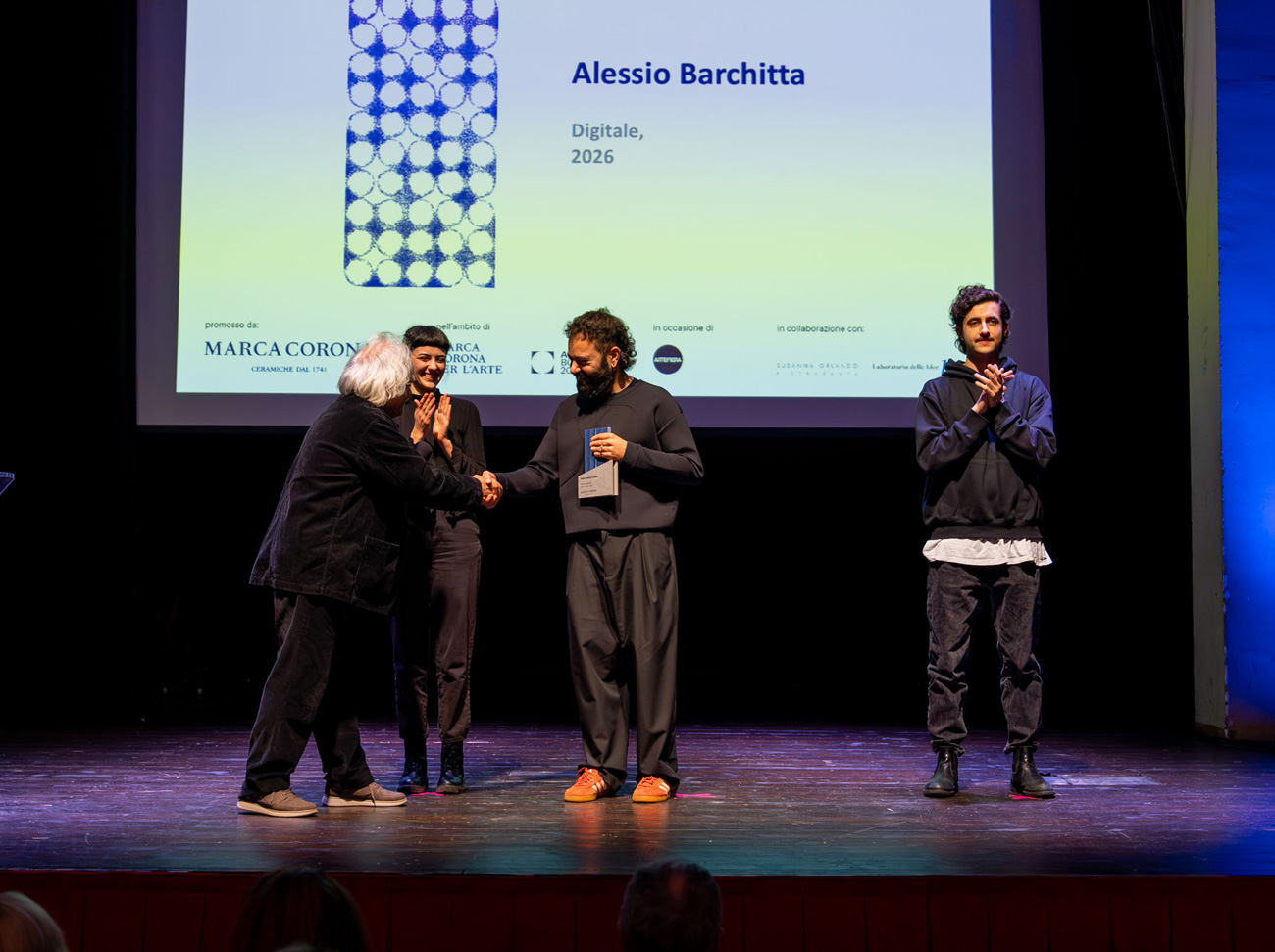
The Premio Marca Corona 2025-2026 prize was awarded to artist Alessio Barchitta, for his work “Digitale” [Fingerprint]
According to the jury, “Digitale” provided the most effective interpretation of the theme of this edition of the competition, representing the worth of manual, participatory making and restoring the centrality of art’s tactile and relational aspects.
Born in 1991, Alessio Barchitta divides his time between Sicily and Milan. His artistic language is complex and varied, but the choice of materials is fundamental to his oeuvre.
As winner of the Award, Barchitta will be able to create the work he has conceived during an artistic residence at Marca Corona. The work will go on public display in autumn 2026 during the opening of the 5th edition of Marca Corona per l’Arte and may be selected for inclusion in the art collections held at Galleria Marca Corona.
The second place in the competition was awarded to Gina Tamborra, for her work “Ri Suona il Sasso” [“Resonating Stone”].
A visual artist and performer, Gina Tamborra explores the topics of women’s mental health and bodily identity, and the female condition, with a clear, unflinching gaze, making them the driver and subject of her artistic work.
With “Ri Suona il Sasso”, Gina Tamborra establishes a dialogue between 2 distant locations linked by individual and collective stories: Sassuolo and Irsina (near Matera in southern Italy), the last town from which a large number of people emigrated during the 1950s to work in the Sassuolo district, powering the growth of the ceramics industry and the area’s development.
The title “Ri Suona il Sasso” is an anagram of the names of these 2 places and evokes an echo of the earth, a gesture that reawakens matter, and memories restored to vibrant life through the motion of the hands.
The jury described Gina Tamborra’s work as a visual meditation on the creative act as a bridge linking places, roots and people. It’s an invitation to rediscover matter as a voice and manual skills as a tool for storytelling, transformation and shared memory.
Third place in the competition was awarded to Francesco Bendini for his work “Superficie orale” [“Oral surface”], based on the use of the mouth as a tool for shaping matter, an intimate, primeval form of making art.
In fact, the work invites us to rediscover the origins of art in the body, as matter - in this case clay - is not only moulded with the hands but actually chewed, radically involving bodily functions in the creative process.
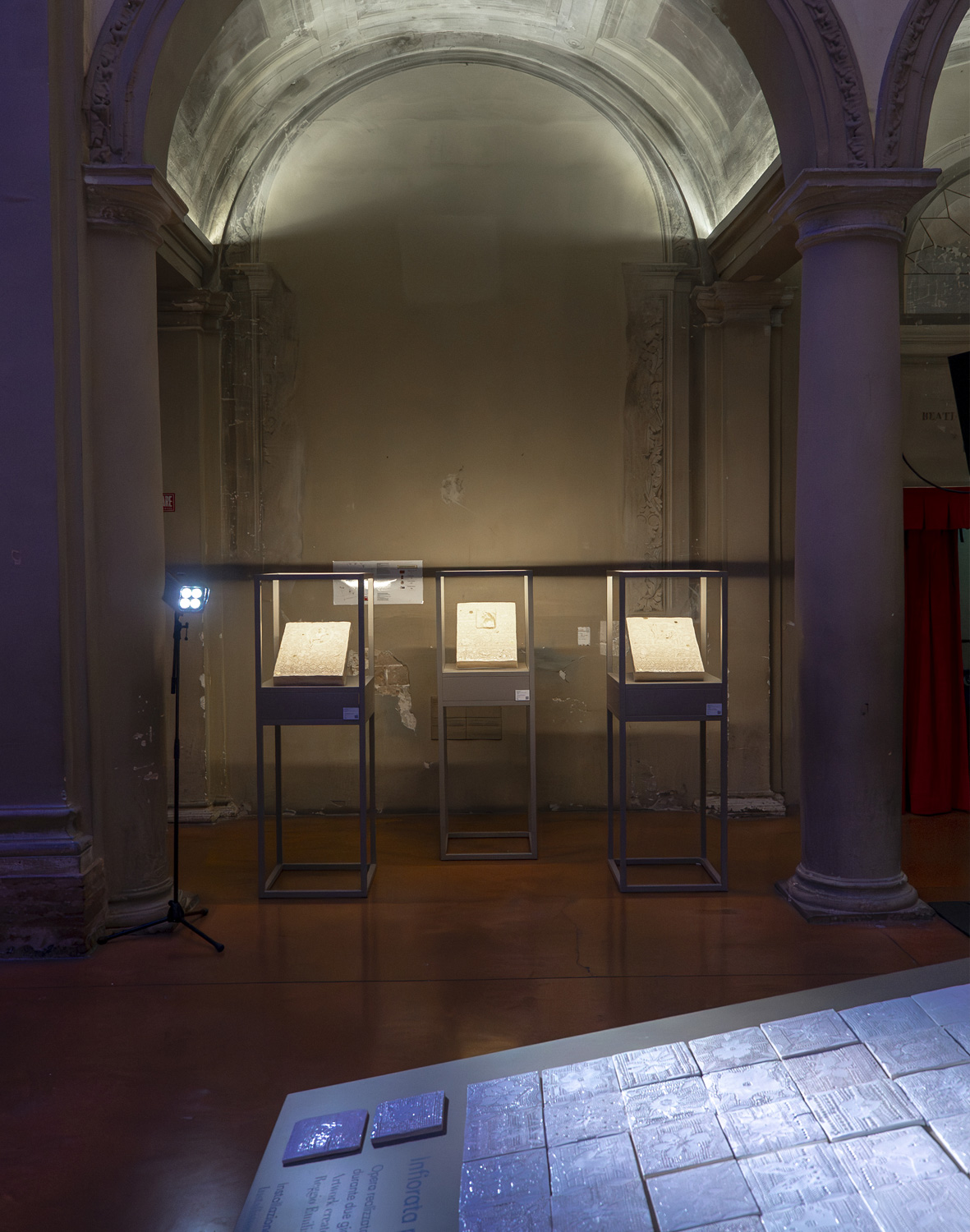
“ricAMARE. Il ricamo è un gesto d'amore”: the exhibition by Pino Deodato was one of the main events at Art City Bologna 2026 and Art City White Night
No survey of the highlights of this Art City Bologna 2026 weekend would be complete without mention of the exhibition by Pino Deodato, curated by Beatrice Audrito entitled “ricAMARE. Il ricamo è un gesto d'amore”.
One of the key events on the festival schedule, the exhibition staged at Teatro San Leonardo intrigued and delighted the many visitors who explored it “live” during the special opening sessions on Saturday, at Art City White Night, and Sunday.
The installation for Art City Bologna 2026 was specially created to dialogue with the setting and displayed all the purity and splendour of the sculptures to excellent effect.
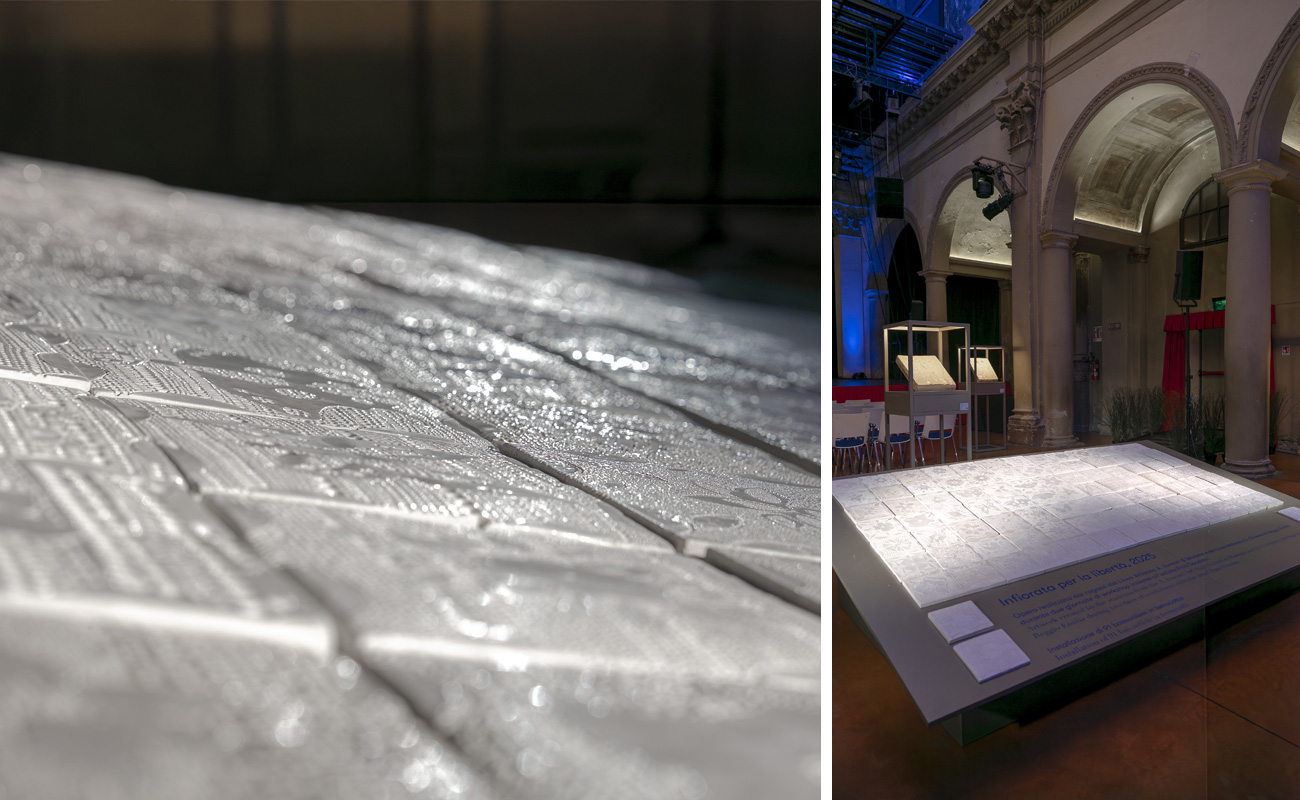
In the centre of the theatre, pride of place went to the mother work that gave its name to the exhibition, “ricAMARE”, created in association with the Marca Corona employees within the Marca Corona per l’Arte project.
It is a large mosaic with bas-reliefs where every exquisite detail tells a story of actions and experiences, “embroidered” on white-glazed terracotta with gilded decorations.
Deodato views “embroidery” as an act of deep meaning and symbolism, as it combines care, dedication and craftsmanship and the transformation of matter into art.
The technique of embroidery on clay also recurs in the participatory work “infiorata per la libertà” [floral decoration for freedom”], also included in the exhibition and produced during the 2-day workshop for the students of the A. Venturi (Modena) and G. Chierici (Reggio Emilia) Artistic High Schools, in which Pino Deodato led the young people in the creation of this choral work comprising 91 “embroidered” bas-reliefs combined in a single monochrome white composition, symbolising dialogue, freedom of expression and shared effort.
As the artist himself stated during the meeting with the public at Art City Bologna:
Making is important, because it produces something solid: something you can see and touch. So we have to value manual skills, as well as knowledge.
Therefore, Pino Deodato’s artistic language engages with and unites people through creativity, manual making and the dialogue his works establish.
The exhibition also included some works from the artist’s solo exhibition: sculptures that thrill with their simplicity and realism, reflecting universal themes such as the relationship between man and nature and the importance of slowing down and taking time to relate to people.
Once again, contemporary art proves to be an extremely powerful language able to speak to people of all ages and all cultural backgrounds, to talk to us about our era and what we, as human beings, experience every day.